How to Choose a Watch Manufacturer
Choosing a manufacturer is the single decision that most influences whether a watch programme is profitable. These are the questions that separate a category specialist from a generalist.
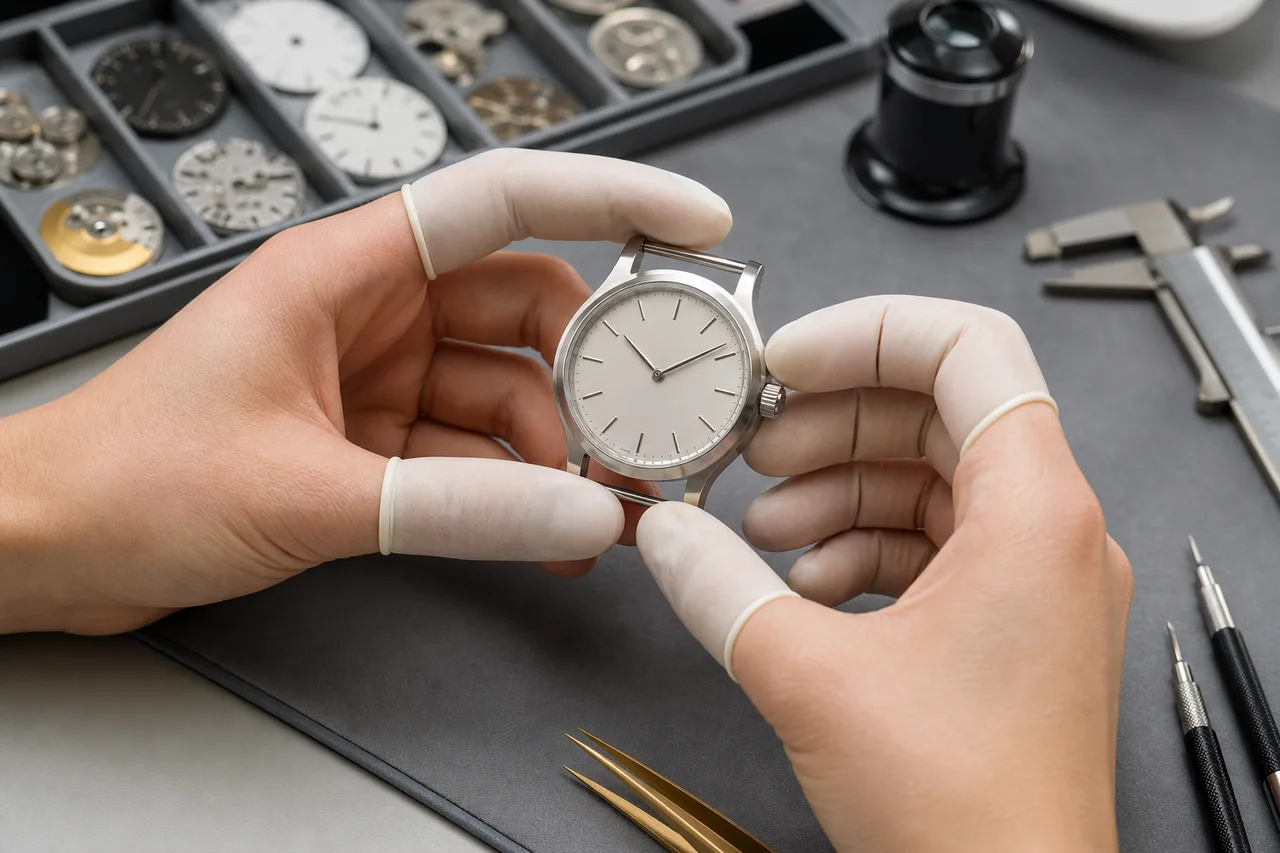
Do they specialise in watches?
A watch manufacturer that also builds electronics, apparel and gift items is not usually the same as one that builds only watches. Category depth shows up in movement knowledge, dial artwork discipline and packaging fit.
Do they work from a written specification?
If the process starts and ends with a WhatsApp message and a rendered image, that is a warning sign. Serious programmes run on a signed specification sheet.
Do they tell you the truth about MOQ?
A good manufacturer will explain which design decisions create supplier minimums and when a simpler private-label route may be more practical. If every quantity is accepted without reviewing the specification, the proposal is incomplete.
Do they cost margin into the product?
For marketplace and retail programmes, ask how they think about fees, returns, packaging weight and inventory. If those questions confuse them, the product will lose money on the shelf.
How do they handle after-sales?
Warranty framework, replacement handling and battery policy should be part of the conversation before production — not after the first return.
Frequently asked questions
What should a manufacturer quotation include?+
It should identify the specification, assumptions, samples, tooling, packaging, inspection, delivery basis, payment terms and exclusions.
Why is a physical sample important?+
It allows the buyer to assess proportions, finish, operation, fit and packaging against the written specification.