The Watch Manufacturing Process, End to End
Most content on this topic is either marketing fluff or overly technical. This is the practical overview a brand founder or product manager actually needs.
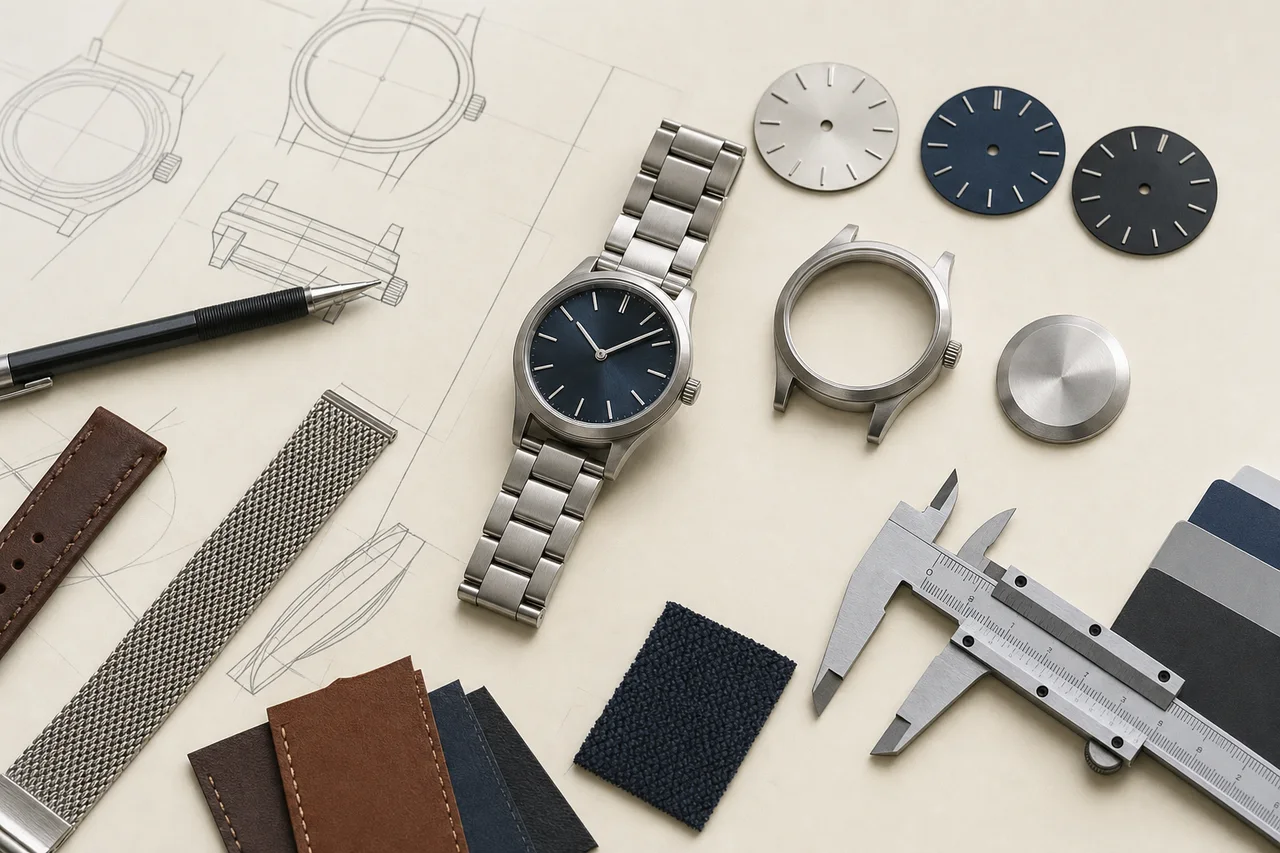
Stage 1: Brief & specification
The programme starts with a written brief — buyer, positioning, price, quantity and lead time — that becomes a technical specification sheet.
Stage 2: Sampling
Physical samples are built and reviewed against the specification sheet. The number of revision rounds depends on the development route, the quality of the brief and what changes after review.
Stage 3: Component sourcing
Movements, cases, dials, hands, crystals, straps and packaging are procured through suitable approved domestic or international supply routes for the programme.
Stage 4: Dial printing and case finishing
Dial artwork is printed. Cases are finished — brushed, polished, plated (rose gold, gold, silver, black, dual-tone or custom IP) to the specification.
Stage 5: Assembly
Movement, dial, hands, crystal and case are assembled in controlled conditions. Straps and buckles are attached.
Stage 6: Testing & inspection
Timekeeping, function, finishing and packaging are inspected against the agreed specification and inspection scope for the programme.
Stage 7: Packaging
Watches are packed in the agreed box format with warranty card, manual, hang tag and barcode.
Stage 8: Delivery
Consolidated or split dispatch, with documentation coordinated for domestic or export shipment.
Frequently asked questions
When should bulk production begin?+
After the relevant specification, sample, materials, packaging, commercial terms and inspection plan are approved in writing.
What commonly delays watch manufacturing?+
Incomplete briefs, late artwork, repeated sample changes, component substitutions, packaging decisions and delayed approvals are common causes.