Japanese vs Chinese Watch Movements — A Fair Comparison
The lazy version of this comparison says Japanese is always better. That's not true. The honest version is that grade, supplier, testing and use case matter more than the country of origin.
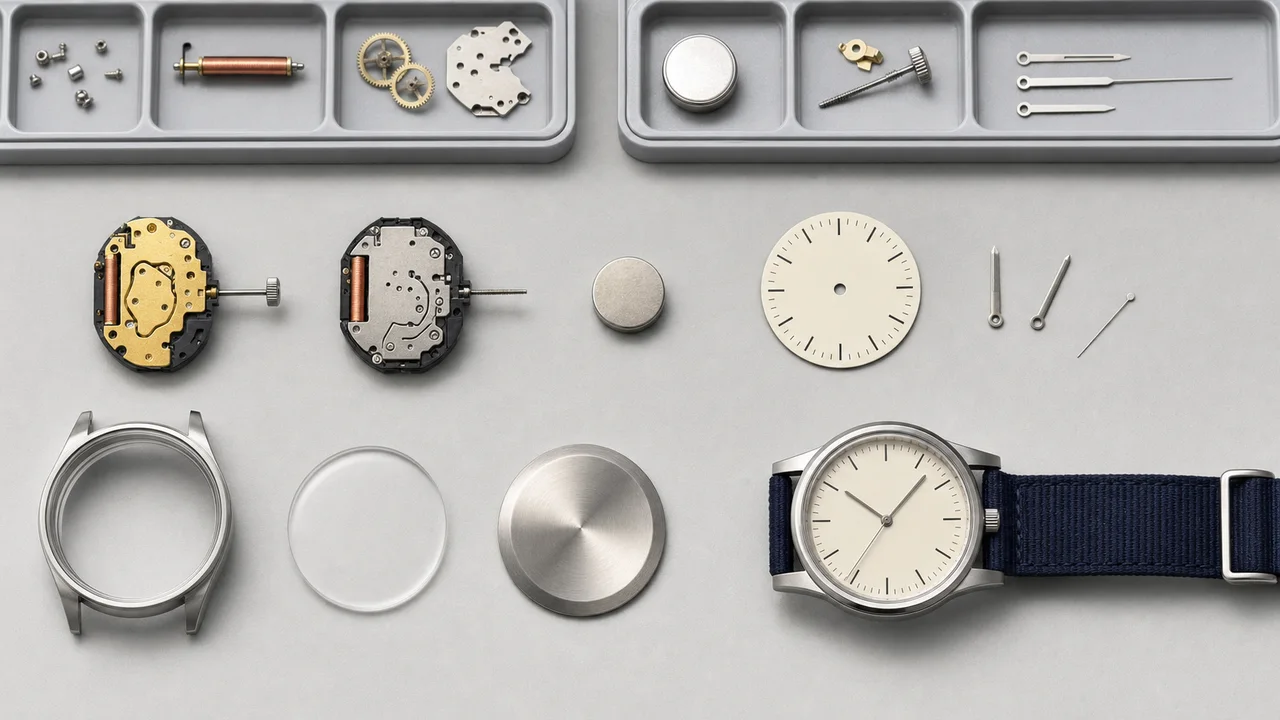
Japanese quartz movements
Suppliers such as Miyota and Seiko Instruments produce highly consistent movements across a wide range of price points. Their strength is predictable accuracy, wide availability and good long-term supply.
Best for: mid- and upper-range fashion watches, brand-defining SKUs and programmes where accuracy claims matter.
Chinese quartz movements
Chinese movements span a broad range of constructions and specifications. Compare the exact proposed calibre, published dimensions, functions, supply route and service plan rather than relying on a country label.
Best for: value-price programmes, high-volume marketplace programmes and multifunction designs where the movement family fits the design need.
The questions that actually matter
Which specific movement grade? What is its published accuracy? What is the expected battery life? What testing protocol does the finished watch pass? What is the warranty framework? These questions are more useful than country of origin.
Practical recommendation
For most brands, the right answer is a mix — Japanese movements where accuracy and brand claim matter, Chinese movements where price and function fit the buyer. The manufacturer's job is to help you make this call by SKU.
Frequently asked questions
Is movement origin enough to judge quality?+
No. Confirm the exact calibre, specification, supply route, documentation, intended segment and after-sales plan.
Should the movement calibre be recorded?+
Yes. The approved calibre and any permitted substitution should appear in the product specification.