Quartz vs Automatic Watches for a New Brand
Quartz and automatic watches create different products, user expectations and after-sales responsibilities. The right starting point depends on the brand promise and buyer.
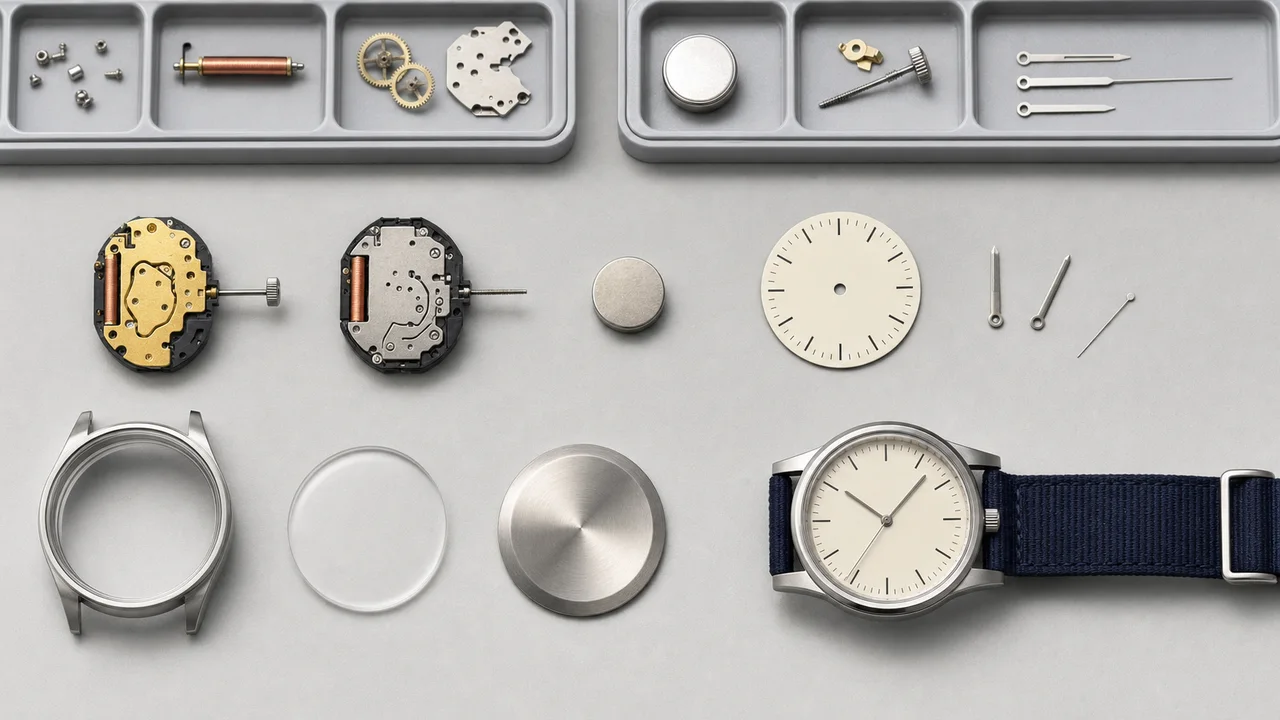
Quartz prioritises convenience
Quartz movements can support slim constructions, consistent everyday timekeeping and straightforward user behaviour. They suit fashion, corporate and accessible premium programmes where the buyer expects the watch to work with minimal interaction.
Battery type, replacement access, movement specification and water-resistance implications still need to be documented.
Automatic creates a mechanical experience
Automatic movements offer visible mechanics, rotor motion and a different ownership story. They also influence case thickness, dial and caseback design, positional accuracy, wearing reserve and user education.
A brand should explain normal mechanical behaviour clearly rather than allowing quartz-level accuracy expectations.
Compare the total product economics
Movement cost is only one difference. Case height, crystal, caseback, assembly, testing, packaging, warranty stock and service capability all affect the programme.
Model expected returns and support questions by sales channel before selecting a movement for storytelling value.
A mixed collection can be valid
Some brands use quartz for core accessible styles and automatic movements for a smaller flagship range. The visual system can remain coherent while movement choices serve different customers.
Record calibre, functions and claims for each SKU so marketing, instructions and warranty support remain accurate.
Frequently asked questions
Are automatic watches more premium than quartz?+
They can support a mechanical product story, but premium value also depends on design, materials, finishing, construction, service and brand positioning.
Do automatic watches need batteries?+
Traditional automatic mechanical movements do not use a standard quartz battery, but the exact movement and user instructions must be confirmed.
Can one brand sell both quartz and automatic watches?+
Yes, when the range architecture, customer promise, pricing and after-sales information make the distinction clear.