Stainless Steel vs Alloy Watch Cases
Case material affects more than durability. It changes weight, finishing options, perceived value, tooling, corrosion planning and the price segment a product can credibly occupy.
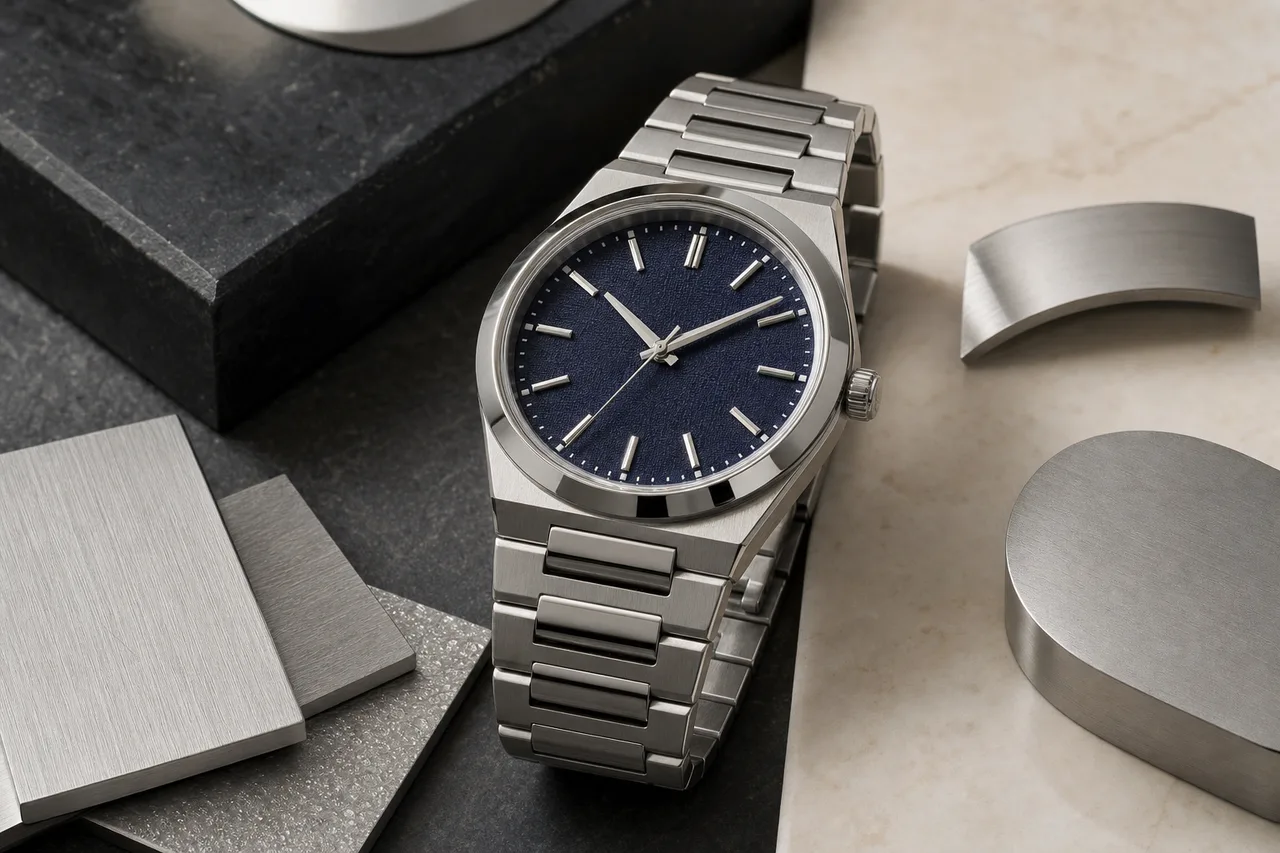
What stainless steel offers
Stainless steel can support crisp machining, brushed and polished surfaces, substantial feel and durable premium positioning. The grade, construction, coating system and finishing specification still need confirmation; the word ‘steel’ alone does not define quality.
Steel bracelets introduce additional decisions around link construction, clasp, tolerances and finishing consistency.
Where alloy cases can be appropriate
Alloy cases can suit fashion-led, promotional or price-sensitive programmes when the construction and coating are specified for the intended use. They may enable shapes or price points that are not practical in machined steel.
The team should assess coating adhesion, surface preparation, caseback interface and expected wearing conditions rather than treating alloy as a generic low-cost substitute.
Compare the complete product
A well-balanced alloy watch may be more appropriate for a campaign than an under-specified steel watch. Conversely, a brand making long-term material and finishing claims needs a construction that supports those promises.
Review the case together with crystal, crown, caseback, strap, movement and water-resistance design because these interfaces determine performance.
Document finish and inspection standards
Approve colour, gloss, brushing direction, polish areas, acceptable marks and contact points on a representative sample. Define whether colour is matched against a physical standard and how visual inspection will be performed.
Do not publish material, coating or resistance claims until the specification and applicable testing support them.
Frequently asked questions
Is stainless steel always the better case material?+
No. The right choice depends on positioning, construction, finish, quantity, target price and expected use.
Can alloy cases have premium finishes?+
They can support attractive finishes, but the substrate, surface preparation, coating and inspection standard must suit the intended programme.
What should be written in a case specification?+
Record material, construction, dimensions, finish map, coating or plating, crown, caseback, crystal interface and applicable tests.